
Monday to Saturday - 8:00 -17:30
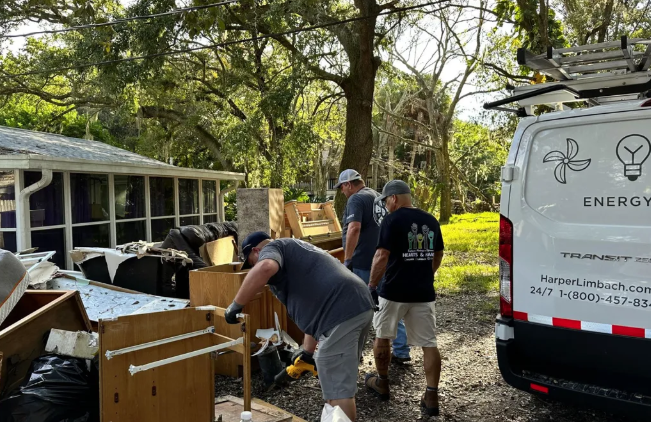
When hurricanes bear down on the U.S., the team at Limbach, a mission-critical building systems solutions firm, is all hands on deck.
The firm provides mechanical, electrical and plumbing support to customers whose business does not stop in times of emergencies, such as local hospitals and emergency rooms.
“When we think about preparing, we think about two things: One is business continuity and making sure that those customers can still continue to service their communities, and then the other is, ‘How do we make sure to keep our teams healthy, safe and able to be in a good position, hopefully, after the hurricane as well?’” Melissa DiMuro, chief people, culture and marketing officer for the company, told HR Dive. “It’s not just about safety at work; it’s also safety at home.”
The team is in preparations throughout hurricane season but ramps up activity when a specific threat is identified, DiMuro said. That involves making sure physical locations and equipment are secured, so there aren’t “unintended consequences during a hurricane” at the firm’s sites or at its customers’ locations.
“There’s a lot of planning,” she said. “We start communications as soon as something has been identified to come our way, and we start a daily rhythm that’s cross-functional across our organization.”
Limbach has employee rosters of everyone located in some typical hurricane impact areas — more than 130 in Tampa and more than 330 in Florida — and is regularly updating its list to make sure the company has the most recent contact and emergency contact information for its employees, she said.
“We’re a small enough company that we can personalize our approach. Every single person will have a one-on-one call or text or engagement with a member of the leadership team before the hurricane, to make sure that they have preparations, find out where they’re going to evacuate to or where they’re going to be located in case they need emergency support, and to make sure they have plans in place,” DiMuro said. “In addition to that, we make sure that every person receives contact after the storm.”
The leadership team gets on a call at 5 a.m. the day after a storm to make sure they’ve traced down every single member of the staff to confirm they’re safe and to assess if they need any help.
“In the event we cannot find a person after the storm, we will call their emergency contact,” she said.
Once all workers are accounted for, it becomes a puzzle to figure out who can work, as well as when and where, she explained. Limbach has to factor in what areas authorities have determined are safe to travel in and what proximity workers are to customers who need support.
“It really depends on what the aftermath of the storm looks like,” DiMuro said. “First and foremost, we’re trying to create opportunities for people who can work to continue working.”
Sometimes, that means driving to customer locations to provide services to get their facilities back in operation. Other times, as with Hurricane Milton, the company rented a hotel conference room space with power where employees could go work. Workers with power also opened their own homes up to their colleagues, she said.
“During this last event we had, the branch manager found out that someone was going to be out of power, and the estimate was 20 days. He took one of their personal generators, put it in the back of his pickup truck and drove it to that employee’s house to hook it up and make sure that they were with power,” DiMuro said.
Limbach also stages employee cleanups, where workers donate their time at their colleagues’ homes and participate in local food drives, she said.
“It’s sort of about the healing process that comes after the hurricane as well,” she said.
During Hurricane Milton, availability of gas and a lack of power “were a huge issue,” DiMuro said. So, the company encouraged employees to work from home whenever possible to conserve fuel for their generators.
“We tried to be as flexible as possible with those types of things, but every storm is different,” she said.

